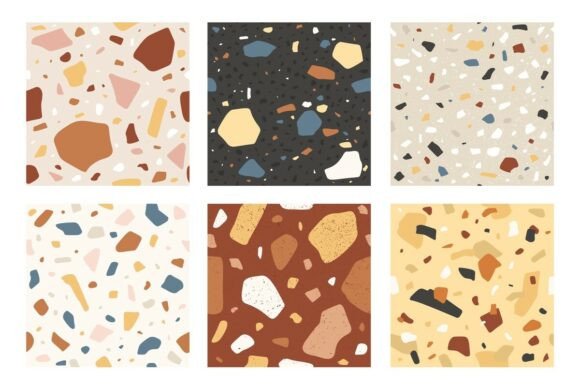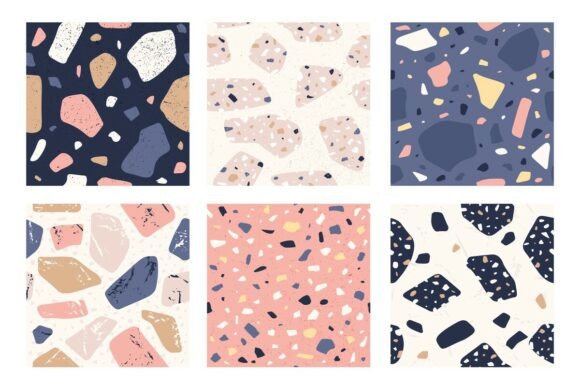
Unlocking the Timeless Elegance of Italian Terrazzo Seamless Patterns
In the vast world of interior design and digital art, few textures command as much attention and admiration as terrazzo. Originally a practical flooring solution born in Italy centuries ago, terrazzo has evolved into a global symbol of sophisticated style. Today, whether you are walking through a modern airport terminal, browsing a high-end fashion website, or selecting wallpaper for a living room, you are likely encountering the chaotic yet harmonious beauty of terrazzo seamless patterns. But what exactly makes this material so special, and how has it transitioned from stone floors to endless vector sets?
This article explores the origins, composition, and modern application of Italian decorative stone tiles, helping you understand why this textured mosaic remains a cornerstone of creativity and design.
From Venetian Floors to Global Icon: The Origins of Terrazzo
To truly appreciate the terrazzo seamless pattern, one must first understand its humble beginnings. The story begins in 15th-century Venice, Italy. Marble workers noticed that the leftover chips from slab production were often discarded. In a stroke of resourceful genius, they began embedding these fragments into clay bases, grinding them down, and polishing the surface to create a smooth, durable floor. This was the birth of seminato, the precursor to modern terrazzo.
Over time, the technique evolved. The clay base was replaced with cement, and later with epoxy resins, allowing for greater durability and a wider range of colors. The defining characteristic of authentic Italian terrazzo is its chaotic stains and irregular distribution of aggregates. Unlike manufactured tiles that mimic a strict grid, genuine terrazzo embraces randomness. It is this organic unpredictability that gives the material its soul, making every square inch unique while maintaining a cohesive visual rhythm.
The Anatomy of a Seamless Pattern
When we discuss a "seamless pattern" in the context of terrazzo, we are referring to a digital or physical tile design that can be repeated infinitely without visible breaks or edges. This is crucial for both architectural applications and digital design.
- The Matrix: This is the binding agent (cement, resin, or digital background color) that holds the design together.
- The Aggregates: These are the chips of marble, granite, quartz, or glass that create the signature speckled look.
- The Grind: The level of polish determines whether the surface looks matte and rustic or glossy and refined.
In a vector set, these elements are mathematically defined rather than pixelated. This allows designers to scale a terrazzo texture from a tiny icon on a smartphone screen to a massive billboard without losing clarity. The "endless" nature of the sample ensures that when tiled across a website background or a large wall, the viewer sees a continuous field of stone rather than a repetitive grid of images.
Why Terrazzo Matters in Modern Design and Technology
You might wonder why a flooring technique from the Renaissance is relevant in the age of virtual reality and minimalist web design. The answer lies in texture and depth. In a digital world that often feels flat and sterile, terrazzo introduces a tactile quality that engages the eye. It bridges the gap between the natural world and human craftsmanship.
In the realm of business and branding, terrazzo communicates specific values: durability, history, and luxury without being ostentatious. Many tech startups and creative agencies now utilize terrazzo patterns in their office interiors and brand assets to signal stability and an appreciation for classic aesthetics mixed with modern innovation.
Practical Applications Across Industries
The versatility of the terrazzo seamless pattern extends far beyond flooring. Here is how different sectors utilize this textured shape:
- Interior Architecture: Beyond floors, terrazzo is now used for countertops, staircases, and even furniture. The seamless nature allows for sprawling surfaces that look like a single, monolithic piece of art.
- Digital UI/UX Design: Web designers use subtle terrazzo backgrounds to add depth to landing pages without distracting from the main content. It provides a neutral yet interesting canvas.
- Fashion and Textiles: The chaotic stain effect translates beautifully onto fabrics, appearing in everything from summer dresses to luxury handbags.
- Packaging: High-end cosmetic brands often employ terrazzo motifs on boxes and bottles to evoke a sense of premium quality and artisanal care.
Clarifying Common Misunderstandings
Despite its popularity, there are several misconceptions about terrazzo that often confuse beginners and enthusiasts alike.
Misconception 1: All speckled floors are terrazzo.
Many people mistake stamped concrete or vinyl sheets with a printed stone pattern for real terrazzo. True terrazzo involves pouring a mixture and grinding it down. A printed pattern may look similar from a distance, but it lacks the depth and the random variation of aggregate sizes that define the authentic look.
Misconception 2: Terrazzo is always expensive and hard to maintain.
While traditional poured-in-place terrazzo requires skilled labor and can be costly, modern innovations have made it more accessible. Pre-cast terrazzo tiles and high-quality digital simulations offer the aesthetic at a fraction of the cost. Furthermore, sealed terrazzo is incredibly resistant to stains and wear, making it a practical choice for high-traffic areas.
Misconception 3: The pattern must be perfectly uniform.
This is perhaps the most critical point. The beauty of Italian decorative stone lies in its imperfection. If a seamless pattern looks too orderly or the chips are identical in size and spacing, it loses the organic charm that defines the style. A good vector set mimics the randomness of nature, ensuring that no two sections look exactly alike.
How to Choose the Right Terrazzo Style
Whether you are a homeowner, a graphic designer, or a business owner looking to refresh your space, selecting the right terrazzo variant is essential. Consider the following factors:
- Scale of Aggregate: Do you want large, bold chunks of marble (classic Venetian style) or fine, sand-like grains (modern minimalist)? Large aggregates make a bold statement, while fine grains offer a subtle texture.
- Color Palette: Traditional terrazzo features white or gray matrices with natural stone colors. However, modern interpretations allow for vibrant matrices in navy, blush, or black, paired with contrasting chips.
- Finish: Decide between a high-gloss polish for a luxurious feel or a honed matte finish for a more contemporary, understated look.
The Future of Stone and Pattern
As we move forward, the intersection of technology and tradition will continue to shape how we experience terrazzo. Advances in 3D printing and sustainable materials are allowing for eco-friendly aggregates, such as recycled glass and plastic, to be used in new terrazzo composites. Simultaneously, AI-driven design tools are generating infinite variations of seamless patterns, pushing the boundaries of what this ancient material can look like in a digital context.
The enduring legacy of terrazzo proves that good design is timeless. It adapts to the needs of the era while retaining its core identity. From the cobblestone streets of old Italy to the pixels on your screen, the chaotic, beautiful dance of stone chips continues to inspire.
In conclusion, understanding the terrazzo seamless pattern offers more than just aesthetic knowledge; it provides insight into how humanity transforms waste into wealth, chaos into order, and simple stone into enduring art. Whether you are laying a floor or designing a webpage, embracing the spirit of terrazzo means valuing texture, history, and the perfect imperfection of the natural world.
For those interested in exploring high-quality vector sets or learning more about installation techniques, numerous resources exist online that bridge the gap between historical craftsmanship and modern digital convenience. The journey into the world of terrazzo is endless, much like the patterns themselves.