Evaluating Terrazzo Seamless Patterns and Veneziano Stone Mosaics for Design Projects
The selection of surface materials is a critical decision in architectural and interior design, influencing both the aesthetic character and the functional longevity of a space. Among the diverse options available, the Terrazzo seamless pattern and the Veneziano Italian stone mosaic represent two distinct yet historically linked approaches to composite flooring and wall treatments. Understanding the nuances between these styles, their textural qualities, and their practical applications is essential for designers, homeowners, and project managers aiming to make informed choices.
Defining the Aesthetic: Terrazzo and Veneziano
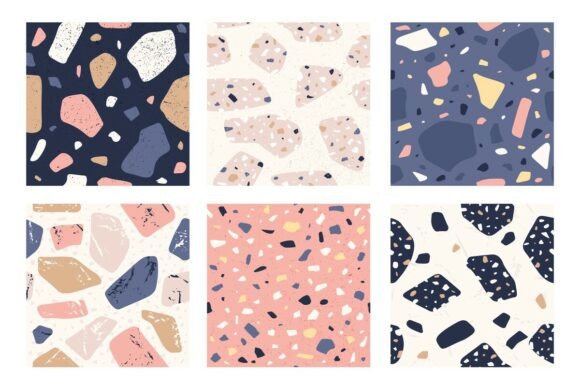
At its core, terrazzo is a composite material poured in place or precast, used for floor and wall treatments. It consists of chips of marble, quartz, granite, glass, or other suitable materials, poured with a binder that is either cementitious (chemical) or polymeric (epoxy). The term Terrazzo seamless pattern refers to the continuous, joint-free appearance achieved when this mixture is polished to a smooth finish, creating a unified visual field where the aggregate distribution appears random yet balanced.
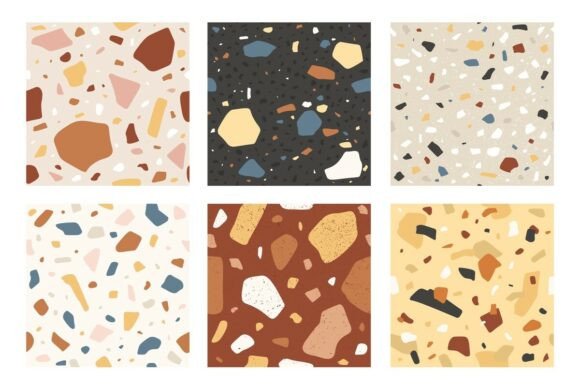
The Veneziano style specifically draws inspiration from the Venetian tradition of mosaic work. While standard terrazzo often utilizes larger, more uniformly distributed chips, a Veneziano texture typically implies a finer, more intricate composition. It mimics the look of traditional Italian stone mosaics, where small, colorful chaotic elements and pieces are collected and bound together to form a dense, richly textured surface. This style emphasizes the decorative aspect of the tile, often featuring a higher density of varied stone types to create a sense of depth and historical authenticity.
Reasons for Interest and Application
Professionals and property owners often gravitate toward these materials for several compelling reasons. Primarily, the visual versatility of a colorful chaotic elements collection allows for immense customization. Unlike uniform ceramic tiles or solid wood planks, terrazzo and Veneziano composites offer a unique fingerprint for every installation. No two sections are exactly alike, providing an organic feel that machine-made products struggle to replicate.
Furthermore, the durability of granite flooring textured samples and similar stone composites is a major draw. These surfaces are renowned for their ability to withstand heavy foot traffic, making them ideal for commercial lobbies, airports, schools, and high-traffic residential areas. The seamless nature of the installation also contributes to hygiene; without grout lines to trap dirt, moisture, or bacteria, maintenance becomes significantly more straightforward compared to traditional tiling methods.
Benefits and Practical Advantages
When evaluating the benefits of Terrazzo seamless pattern. Veneziano designs, longevity stands out as the primary advantage. Properly installed and maintained, these floors can last for decades, often outliving the building itself. The polishing process enhances the hardness of the surface, rendering it resistant to scratches and wear.
- Aesthetic Continuity: The seamless application eliminates visual breaks, making spaces appear larger and more cohesive.
- Design Flexibility: Architects can manipulate the size, color, and type of aggregate to match specific brand colors or design themes.
- Sustainability: Many modern terrazzo mixes incorporate recycled materials, such as post-consumer glass or reclaimed stone, contributing to LEED certification points.
- Low Maintenance: Once sealed, the non-porous surface requires only routine sweeping and occasional damp mopping.
Additionally, the availability of vector sets and digital textures for these patterns aids in the preliminary design phase. Designers can visualize how a specific granite flooring textured sample will interact with lighting and furniture before committing to the physical installation, reducing the risk of aesthetic mismatches.
Tradeoffs and Considerations
Despite the numerous advantages, there are significant tradeoffs to consider. The initial cost of installation is generally higher than that of standard ceramic tiles or vinyl flooring. This is due to the labor-intensive process of mixing, pouring, grinding, and polishing. Skilled artisans are required to ensure the aggregate is evenly distributed and the final surface is perfectly level.
Another consideration is the potential for cracking. While the material itself is durable, terrazzo is rigid. If the subfloor shifts or settles, the terrazzo layer may crack. In seismic zones or buildings with unstable foundations, this risk must be mitigated through proper subfloor preparation and the inclusion of control joints, which slightly compromise the "seamless" ideal.
Furthermore, the acoustic properties of stone composites can be a drawback. Hard surfaces reflect sound, potentially increasing noise levels in open-plan offices or large halls. Acoustic underlayments or area rugs may be necessary to manage reverberation, adding to the overall project complexity and cost.
Ideal Situations for Implementation
The Veneziano italian stone mosaic composite texture is a strong fit for projects where branding and identity are paramount. High-end retail stores, boutique hotels, and corporate headquarters often utilize these floors to convey a sense of luxury and permanence. The ability to embed logos or create specific pictorial elements within the floor makes it a powerful marketing tool.
It is also highly suitable for institutional settings where hygiene and durability are non-negotiable. Hospitals, laboratories, and educational facilities benefit from the seamless, easy-to-clean surface. In residential contexts, it serves well in entryways, kitchens, and bathrooms where water resistance and stain resistance are prioritized.
When to Consider Alternatives
There are scenarios where alternatives may be worth considering. For projects with strict budget constraints, porcelain tiles that mimic the look of terrazzo offer a cost-effective solution. While they lack the true depth and seamless quality of poured terrazzo, modern printing technologies have made these imitations increasingly convincing.
If the project timeline is tight, pre-cast terrazzo tiles might be a better option than poured-in-place systems. Pre-cast tiles can be installed more quickly, similar to standard ceramic tiling, though they will introduce grout lines. Additionally, for renovations where adding significant weight to the structure is a concern, lighter composite materials or luxury vinyl tiles (LVT) with terrazzo prints may be structurally safer than heavy stone and cement mixes.
Decision-Making Insights
To determine if a Terrazzo seamless pattern. Veneziano aligns with your goals, evaluate the lifecycle cost rather than just the upfront expense. If the objective is a permanent installation that minimizes long-term replacement costs, the investment is often justified. However, if the space is intended for short-term use or frequent redesign, the permanence of terrazzo may be a liability.
Assess the subfloor conditions rigorously. A successful installation depends entirely on the stability of the base. Engage with contractors who specialize in decorative concrete and stone composites to review sample swatches in the actual lighting conditions of the site. Digital renderings using vector set data can provide a general idea, but physical samples of the colorful chaotic elements are necessary to judge the true scale and color balance.
Ultimately, the choice between a standard terrazzo finish and a refined Veneziano mosaic comes down to the desired level of detail and the narrative you wish the space to tell. Both offer robust, beautiful solutions, but they require a commitment to quality installation and an appreciation for the unique characteristics of natural stone composites.