Integrating the Coquette Frame into Professional and Creative Workflows
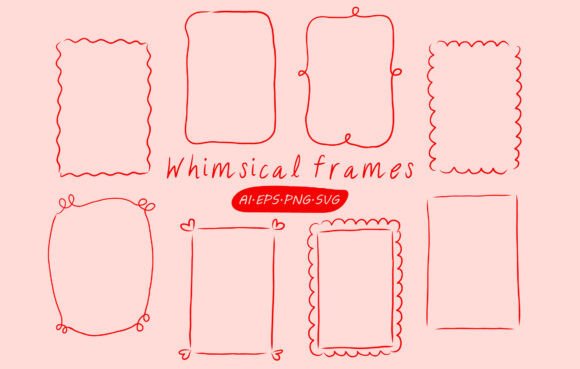
In the current landscape of digital design and content creation, visual consistency is often the differentiator between a project that feels amateurish and one that exudes professionalism. While trends shift rapidly, the demand for assets that convey warmth, personality, and approachability remains constant. The Coquette Frame represents more than just a decorative element; it is a strategic asset for creators looking to infuse a specific aesthetic—playful, romantic, and hand-drawn—into their broader production pipelines. Understanding how to integrate this whimsical frames clipart set effectively requires a shift in perspective from viewing it as a simple download to treating it as a core component of your design workflow.
When we discuss the implementation of hand-drawn decorative frames, we are addressing the pre-production and execution phases of a creative project. Before a single pixel is placed or a layout finalized, the choice of framing dictates the tone of the entire piece. The Coquette style, characterized by smooth lines and a charming doodle feel, serves as an immediate visual cue. It signals to the audience that the content within is curated with care and possesses a human touch. For professionals ranging from social media managers to small business owners, selecting the right frame early in the process prevents the need for costly redesigns later. It establishes the boundaries of the design space, literally and figuratively, guiding where text, imagery, and white space should reside.
Strategic Placement in the Design Lifecycle
The utility of the Coquette Frame extends across various stages of a project lifecycle. In the planning phase, these frames act as mood board anchors. When brainstorming concepts for Valentine's Day campaigns, wedding invitations, or brand refreshes for boutique businesses, incorporating these elements helps stakeholders visualize the final output. Because the style is inherently romantic and cute, it naturally filters out incompatible design directions, saving time during the decision-making process.
During the execution phase, the versatility of the file formats becomes critical. A robust workflow demands assets that play well with existing software ecosystems. This collection includes AI, EPS, SVG, and PNG files, ensuring compatibility whether you are working in vector-based environments like Adobe Illustrator or raster-based platforms like Photoshop and Canva. For a freelancer managing multiple client accounts, the ability to scale an SVG file without losing resolution is paramount. It allows the same frame to be used on a massive trade show poster and a tiny Instagram story highlight icon without compromising quality. The 300 DPI PNGs with transparent backgrounds further streamline the process, eliminating the need for manual background removal and allowing for immediate layering over complex textures or photographs.
Post-production also benefits from the consistent use of such assets. When building a library of templates for recurring tasks—such as weekly quotes, monthly planners, or seasonal greetings—having a standardized set of eight romantic frames ensures brand cohesion. Instead of hunting for new graphics every time a post is needed, the creator can rely on this established set, varying only the internal content. This reduces cognitive load and increases output speed, a crucial factor for productivity-minded users and entrepreneurs who must balance creativity with operational efficiency.
Compatibility and Technical Integration
One of the most significant friction points in creative workflows is asset incompatibility. A beautiful graphic is useless if it cannot be edited or resized to fit the required medium. The Coquette Frame set addresses this by providing industry-standard vector formats. Vector files (AI, EPS, SVG) allow for infinite scalability and color customization. If a client's brand guidelines require a specific shade of pink rather than the default doodle color, a designer can easily adjust the stroke color in seconds. This level of control is essential for maintaining brand integrity.
Furthermore, the integration of these frames into digital printing processes is seamless. The high-resolution specifications ensure that physical products, such as scrapbooking pages, greeting cards, or branded merchandise, print with crisp, clean lines. There is no pixelation or blurring, which often plagues lower-quality clipart. For publishers and educators creating printable worksheets or planners, this reliability means fewer proofing rounds and less waste in physical production.
It is also important to consider how these frames interact with other design elements. The hand-drawn nature of the Coquette Frame pairs exceptionally well with serif typography for a classic look or handwritten fonts for a cohesive, informal vibe. However, they may clash with ultra-modern, geometric sans-serif fonts unless a deliberate contrast is intended. Understanding these typographic relationships is part of the implementation strategy. A practical tip is to test the frame against your primary typeface before committing to a full layout. This small step in the preparation phase prevents aesthetic dissonance in the final product.
Workflow Optimization and Organization
To maximize the value of this clipart set, organization is key. Professionals should treat these eight frames as a modular system. Create a dedicated folder in your asset management system, tagging the files with relevant keywords such as "romantic," "doodle," "border," and "vector." When a new project brief arrives that calls for a "soft" or "inviting" aesthetic, you can immediately retrieve these assets rather than starting from scratch. This systematic approach transforms a simple purchase into a long-term resource.
Consider the following workflow example for a social media manager:
- Preparation: Import the SVG files into your template software. Create master layers for each of the eight frames.
- Customization: Adjust the stroke weight and color to match the current campaign's palette. Save these variations as separate components.
- Deployment: Drag and drop the pre-customized frames onto new content layouts. Insert the quote or image, ensuring the hand-drawn lines do not obscure critical information.
- Quality Control: Review the composition on both mobile and desktop previews to ensure the delicate lines remain visible on smaller screens.
This process highlights how the Coquette Frame facilitates speed without sacrificing uniqueness. Because the lines are smooth and the style is distinct, the frames add value even when used repeatedly, provided the internal content changes. This repeatability is vital for building brand recognition; audiences begin to associate that specific whimsical border with your content.
Use Cases Across Industries
The application of these frames is not limited to traditional graphic design. Educators can use them to create engaging classroom materials that feel less rigid and more inviting for students. Bloggers can utilize the PNG versions to break up long-form text, adding visual interest to headers or pull quotes. Small business owners selling handmade goods can incorporate the frames into their packaging labels or thank-you cards, reinforcing the "handcrafted" narrative of their brand.
In the context of event planning, particularly for weddings or anniversaries, these frames serve as the foundation for invitations and menus. The romantic undertone aligns perfectly with such occasions. By using the vector files, planners can scale the frames to fit large welcome signs or petite place cards, maintaining a unified theme throughout the event infrastructure. This consistency enhances the guest experience and reflects poorly on the organizer if disjointed visuals are used.
Long-Term Value and Consistency
Investing in a high-quality clipart set like the Coquette Frame is an investment in workflow stability. Trends in digital art come and go, but the need for reliable, editable, and aesthetically pleasing borders is perennial. The hand-drawn style offers a timeless quality that resists dating quickly, unlike some hyper-specific digital effects. By integrating these assets into your standard operating procedures, you ensure that your output remains consistent over months and years.
Moreover, the emotional resonance of the coquette aesthetic should not be underestimated. In a digital world often dominated by cold, corporate minimalism, introducing elements that feel human, soft, and playful can significantly increase engagement. It invites the viewer to pause and connect on a more personal level. Whether the goal is to sell a product, teach a concept, or celebrate a milestone, the frame sets the stage for that connection.
Ultimately, the successful implementation of the Coquette Frame relies on viewing it as a tool for efficiency and expression. It bridges the gap between raw ideas and polished deliverables. By preparing your files, understanding their technical capabilities, and strategically placing them within your creative process, you unlock their full potential. The result is a body of work that is not only visually cohesive but also efficient to produce, allowing you to focus more on the message and less on the mechanics of decoration.